Manzanitas in Bloom
Manzanitas (Arctostaphylos species) burst into beautiful bloom early each year during the rainy season. At Home Ground Habitats, our collection of manzanitas is now almost five years old, and many specimens have developed the intricate branching and striking deep red bark that make these plants so distinctive.
A Sanctuary for Wildlife
Manzanitas are not just beautiful — they also support a wide variety of life, both in the wild and in garden sanctuaries. Nascent flower buds often start to develop in late summer, almost right after the crop of ‘little apples’ has dropped. Last summer, these small fruits served as a major food source for a pair of Gray Foxes raising their four pups in our garden sanctuary.
Blooms appear early in the new year, and small mason bees (Osmia spp.) are among the first pollinators to visit the flowers for nectar and pollen. These native solitary bees are less than 1/2 inch long, with rounded, smooth black bodies that often have a shiny metallic green, blue, or purple sheen. I watched a Rufous hummingbird flit between the flowers on one shrub, sipping nectar, gleaning tiny insects from the leaves, and then settling down on a small branch for a quick break.
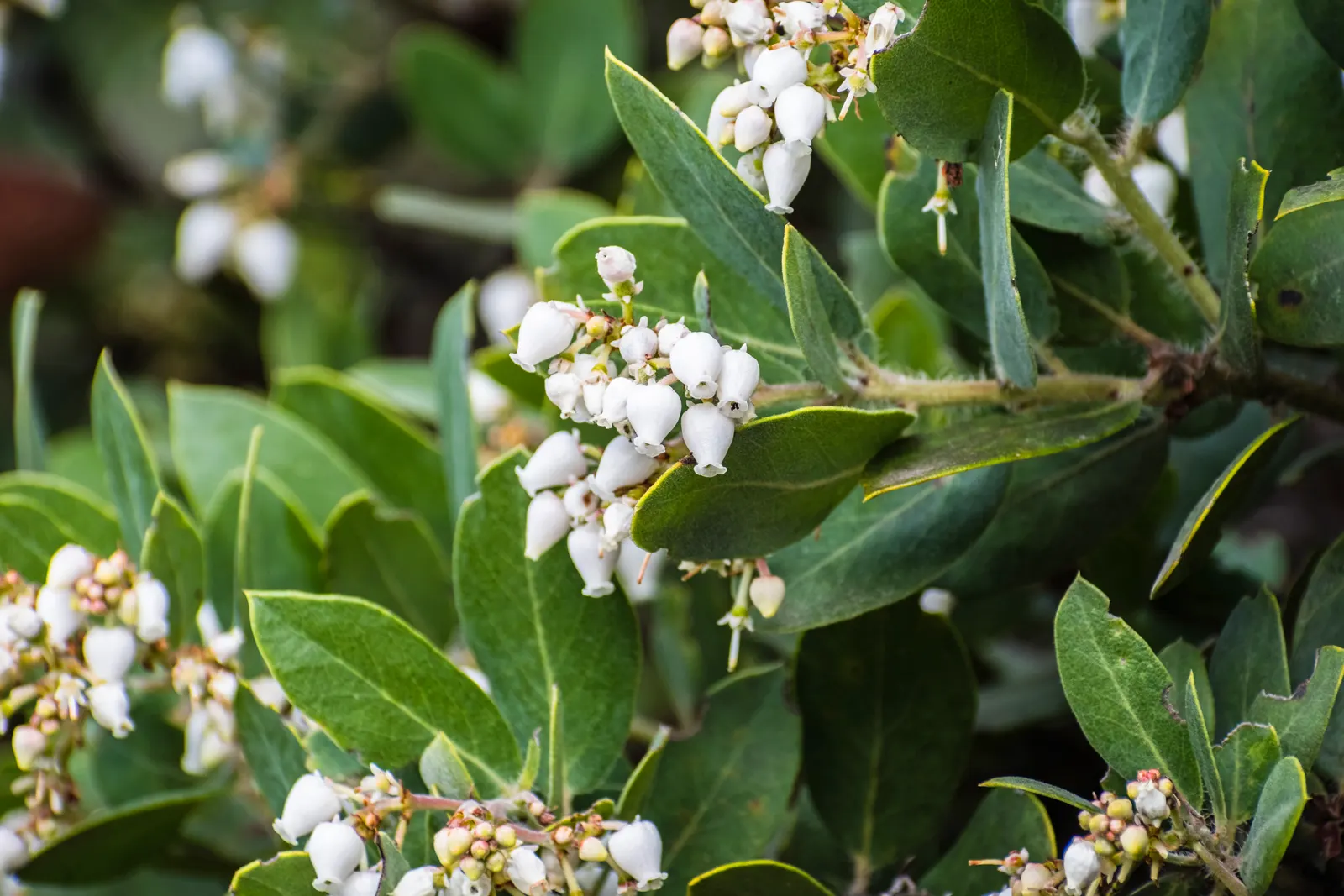
White Manzanita flowers and foliage
An Iconic Native Plant
Manzanitas (the name means ‘little apples’ in Spanish) are among California’s most iconic native plants. All are evergreen, and they come in many forms—from small trees to large and small shrubs, as well as low and taller ground covers. Fossil records show Arctostaphylos species migrating and adapting to climate changes and recurring fires over the last 15 million years. A vast number of species are endemic to certain areas and ecological niches, mostly in California and along the Pacific Coast, depending on specific factors such as soil, drainage, and exposure. Only one species, Bearberry (Arctostaphylos uva-ursi), grows throughout the entire Northern Hemisphere as a prostrate ground cover rarely more than one foot tall.
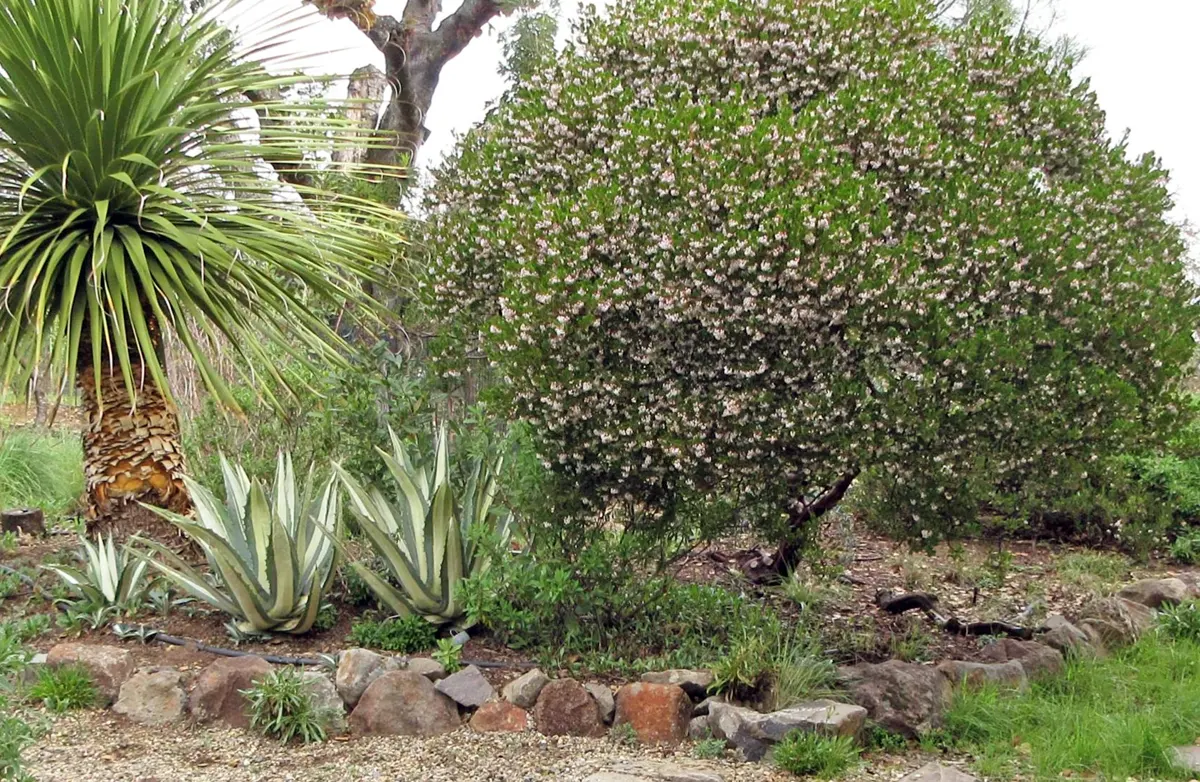
Manzanitas in a mixed border
Local Species and Varieties
In Marin County, the local manzanitas are mostly Arctostaphylos manzanita, while in Sonoma County, one species, Arctostaphylos densiflorus, provides landscapers with the dependable ‘Howard McMinn’ shrub. Many more species and named varieties are adaptable to garden culture. Growing Conditions
Manzanitas don’t need rich soil but do require full sun and good drainage. They are highly drought-tolerant. In our demonstration gardens, we create mounded berms to ensure good drainage, using soil called ‘builder’s’ or ‘clean-fill,’ which is free of organic matter. Nutrients come from the surface only—in the wild, provided by the ‘duff’ or leaf litter, and in cultivation, by regular applications of a simple ‘all-green’ mulch.
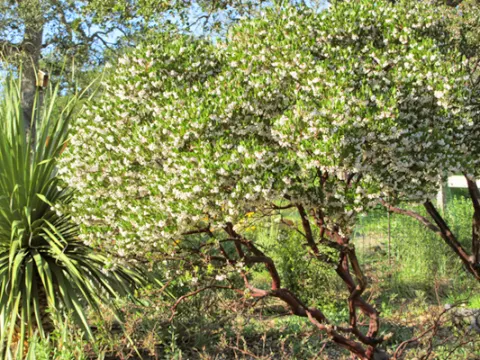
Manzanitas. Photo: Howard McMinn
Uses in Garden Design
Manzanitas can be a striking specimen plant, such as Arctostaphylos pajaroensis, which boasts gorgeous pink flowers that bloom alongside new growth in tones of red and light green. Other species work well in drifts, mixed border plantings, or hedgerows. These plants attract and support a variety of pollinators throughout the seasons and were also historically a food source for Native Peoples.
Try Manzanita Cider!
For adventurous gardeners, try making Manzanita Cider! Collect the fruits while they’re still slightly green, crush them lightly, and combine them with water in a glass jar. Let the mixture sit in the sun to brew, then strain off the liquid, add a little honey, and enjoy a refreshing, naturally infused drink.
Visit Us at Home Ground Habitats
Come visit Home Ground Habitats to purchase manzanitas and see them in full bloom in our gardens. By planting manzanitas in your own yard, you can create a haven for pollinators like mason bees and hummingbirds while contributing to the health of your local ecosystem. Every purchase made at our non-profit butterfly sanctuary and garden supports community projects that improve ecosystems and promote biodiversity. Let’s work together to make a positive impact—one plant at a time.
Return to Plant of the Month