By Charlotte Torgovitsky.
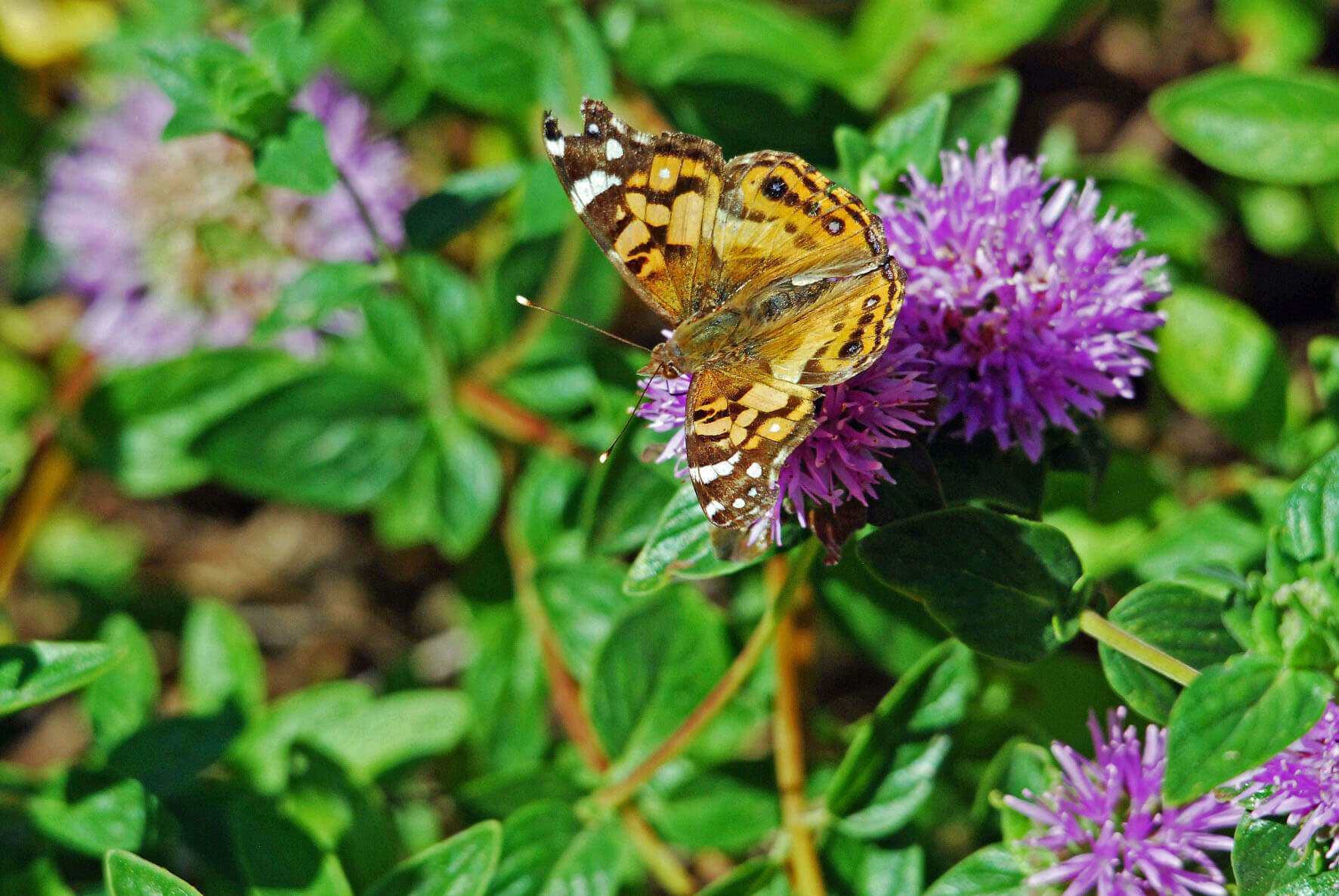
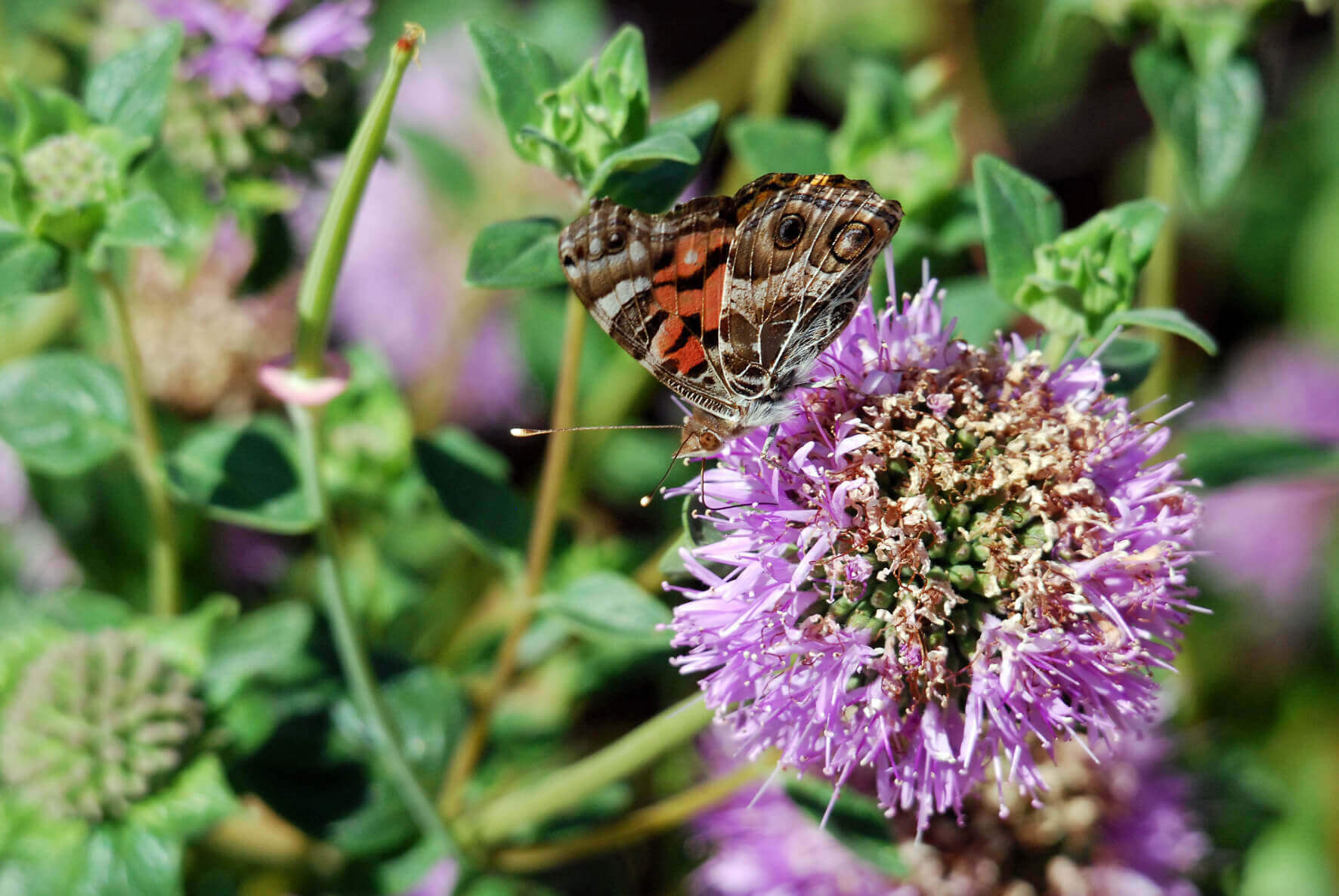
This beautiful little California native “sub-shrub” is a wonderful pollinator plant that comes into its full glory early in summer. A member of the mint family, Coyote Mint (Monardella villosa) supports local ecosystems: its profuse lilac blooms attract a wide range of pollinators, including bees, butterflies, and birds. And great news to all gardeners– it’s of no interest to deer!
Why Plant in Drifts
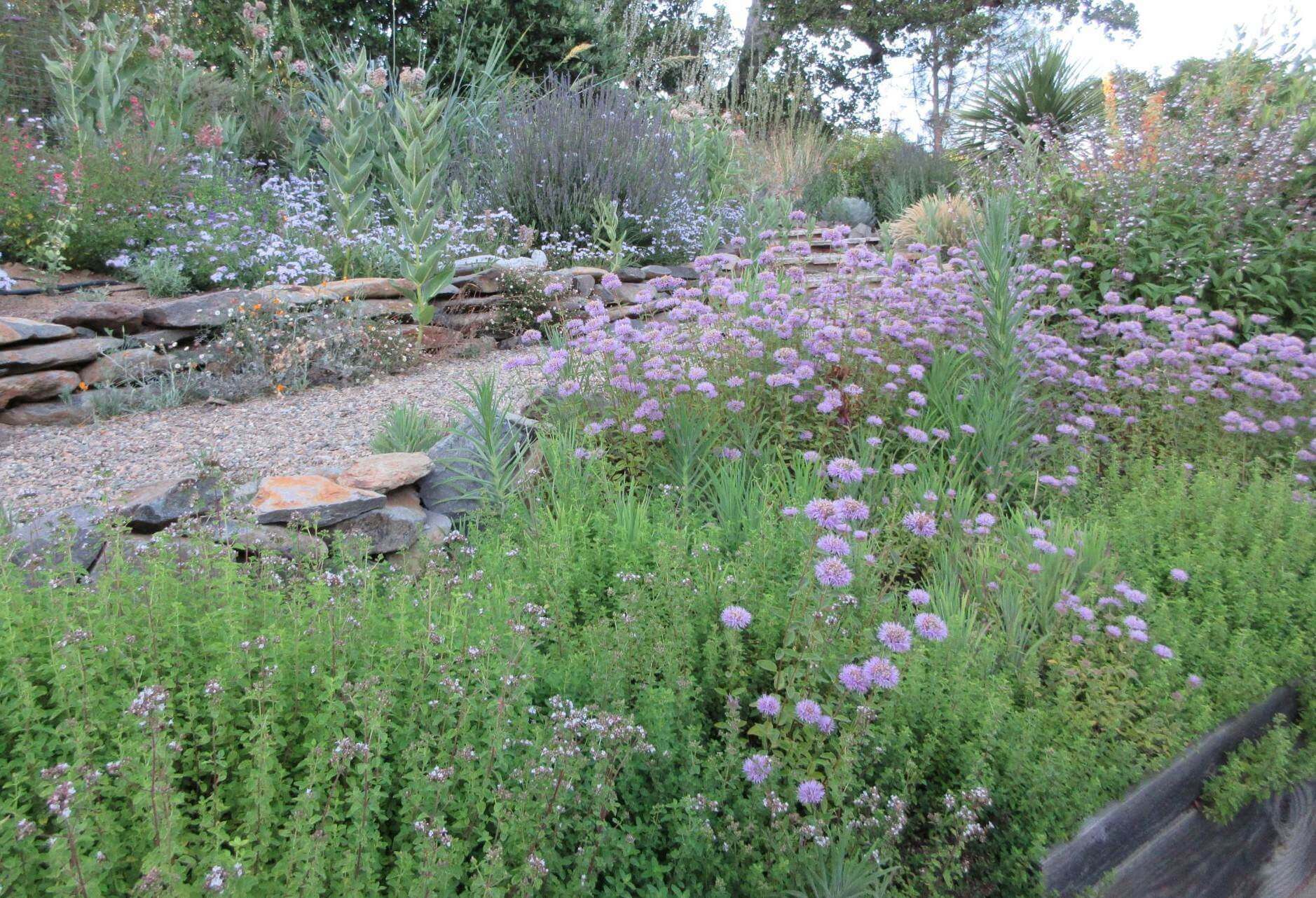
Coyote Mint is most effective when planted in a drift of three to five plants. Butterflies and other pollinators benefit from these clustered groups of nectar plants. Wild creatures always have to consider how much energy they’re expending compared to how much they’re taking in. Within flowering drifts of the same plant, insects can take in a lot of energy in the form of nectar and pollen without having to move very far.
Growing Tips
Coyote Mint is a tender, somewhat delicate plant when young and the new stems are still green. It benefits from some protection against strong winds until it develops the woody structure of a small shrub. An average mature size is about two feet high and as wide. Water needs are low, and good drainage is a must. Coyote Mint thrives in full sun, though it will grow in part shade and just bloom more sparsely. Every few years, a mature plant should be cut back fairly hard during the rainy season.
Deer Resistance and Companion Plants
The common name “Coyote Mint” hints that the leaves are highly fragrant—a trait that deer usually find unappealing (but perhaps coyotes like it?). In that same category are almost all Salvias, as well as the Mediterranean culinary herbs. Oregano, Marjoram, and Thyme are drought-tolerant, flowering groundcovers that attract a host of pollinators. Lavender and Common Sage (Salvia officinalis) are small shrubs well suited to a mixed border, and Common Sage has lovely light blue flowers. Rosemary has been hybridized into a number of forms, from groundcovers to small shrubs to upright plants that can be pruned into background screens.

Looking for a Tasty Mint Tea?
Unfortunately, Monardella does not make a tasty mint tea—but it’s still a great addition to a pollinator garden. Another California “mint” that does make a delicious tea is Yerba Buena (Clinopodium douglasii), a fragrant, low-growing groundcover. Yerba Buena has tiny white flowers and thrives in the light shade under our native oaks—and it’s completely deer-proof. Once established, it needs nothing but rainwater. In my garden, it creeps out from around a Coffeeberry and mingles nicely with Douglas Iris, all planted under a Coast Live Oak.
Available at Home Ground Habitats
Coyote Mint and yerba buena are both available for purchase at Home Ground Habitats! All proceeds support our community habitat garden projects.
Current open hours are: Tuesdays, Wednesdays, and Thursdays from 1–4pm.
1875 Indian Valley Rd., Novato
Return to Blog