Insect pollination is one of the most important ecosystem services provided to humankind. Without pollination, human beings would have to make do with a greatly curtailed food supply. Not only do insects pollinate our plants, they are the foundation of the food chain, providing an incredibly important source of protein and nutrients for birds and other small animals.
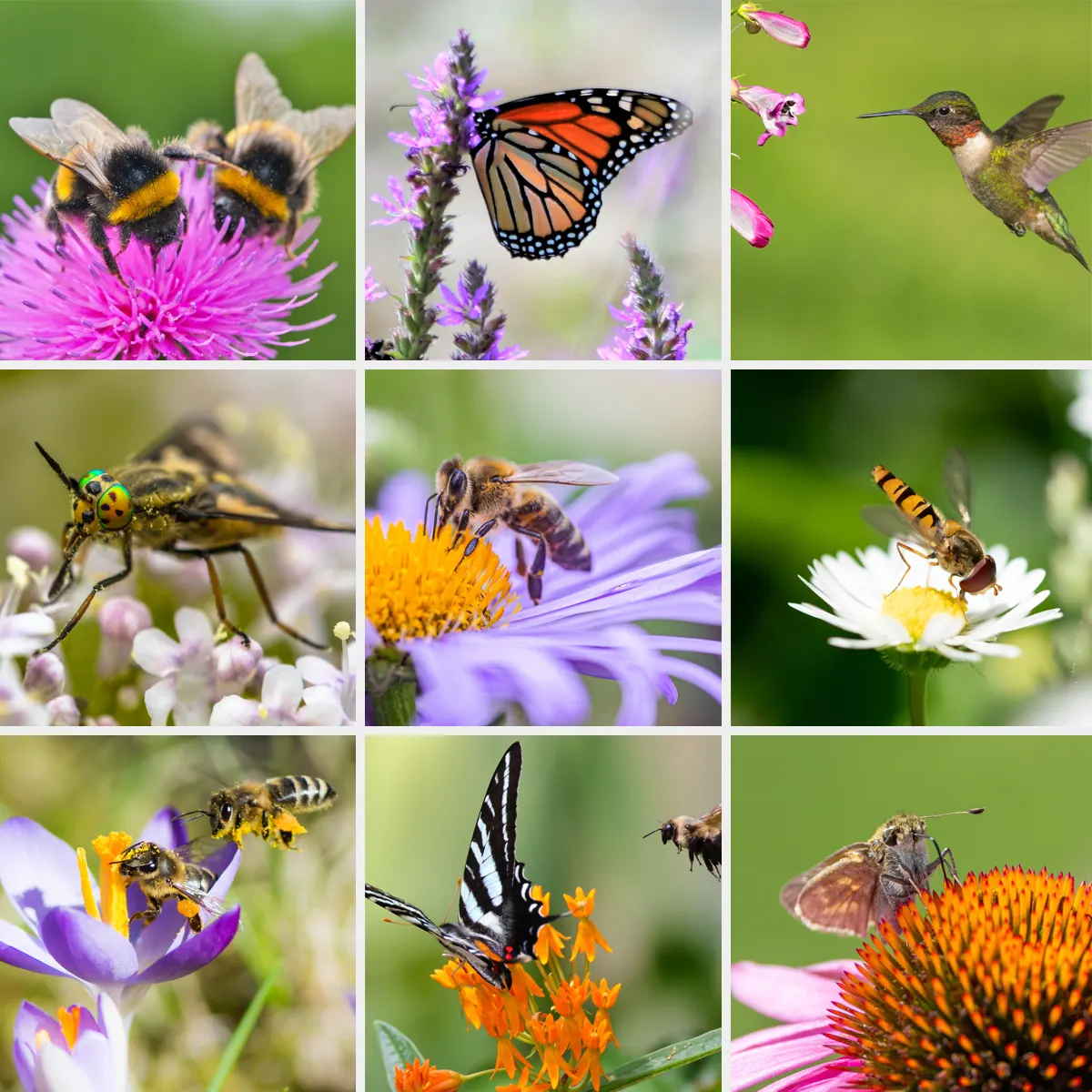
Remember, too, that European honeybees are not the only pollinators; there are about 1,500 species of native, mostly solitary bees in California. Many native bees are specialist pollinators that co-evolved with the flowers of specific native plants; others have very short adult flight periods that are perfectly timed to the phenology of “their” native plants. See the handout at right, Best Plants for Bees, on the plants that prove most attractive (and provide the most food) to our native bee populations. I urge you to develop gardening habits that encourage all these native pollinators such as squash bees, mason bees, bumblebees, flies, wasps, beetles, and butterflies. Be sure you learn to identify the different life stages of these insects.
When designing your habitat garden, plant for the insects first—all else will follow! Learn more about the plant families that provide unusually rich resources for insects. Many of the plants from the aster/sunflower family and umbellifers (carrot family) are particularly good at attracting pollinators because the flowers are plentiful sources of both nectar and pollen.
Grow drifts of flowering plants that provide food resources throughout each season, if possible. Plant California native wildflowers and strive to get natural populations established in your garden. Many native annual wildflowers show up at just the right time to provide for native insect species.
Remember: California’s flora and fauna evolved together!
Recommended Reading
Bees & Other Insects
Field Guide to Common Bees of California
by Gretchen LeBuhn, Noel Badges Pugh (Illustrator)2013
Humblebee Bumblebee
Brian L. Griffin; Knox Cellars Pub.2012
Our Native Bees
Paige Embry; Timber Press2018
The Bee-Friendly Garden
Kate Frey and Gretchen LeBuhn; Ten Speed Press2016
Native Plants in the Wild & in the Garden
Insects and Gardens: In Pursuit of a Garden Ecology
Eric Grissell, Timber Press2001
Butterflies
The Natural History of Butterflies
John Feltwell; Facts on File1986
This book goes into incredible detail about life cycle, adaptations and plant associations. The butterflies described are mostly European species, but much of the fascinating detail also applies to the life histories of local species. Back to Pollinators Waystation